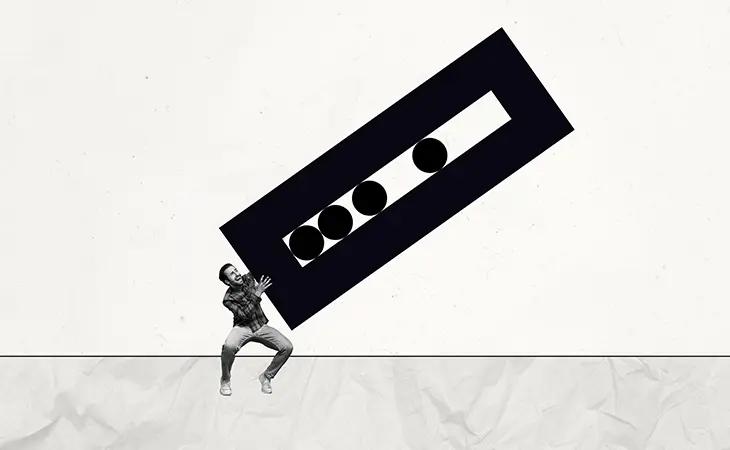

The mental load no one warns you about when you own a business is not the long hours or the late nights. Most owners expect those. What catches people off guard is the constant background pressure that never fully shuts off. The invisible thinking, worrying, planning, and decision-making that follows you even when the laptop is closed.
As businesses grow, the mental load grows with them. More clients, more systems, more money at stake, more people depending on you. Even good problems add weight. Over time, that weight can quietly affect focus, energy, confidence, and enjoyment if it is not acknowledged and managed.
This is the part of ownership that rarely makes it into motivational posts or success stories. And yet, it is one of the most defining realities of running a business long term.
The Constant Decision-Making Never Really Stops
Owning a business means being the default decision-maker, even when decisions seem small. Pricing questions, client situations, staffing issues, tech choices, timing, priorities. Each one requires mental energy, and they stack quickly.
Many owners underestimate how draining constant decision-making can be. Even when you are not actively choosing something, your brain is holding open loops. Should I follow up on that lead? Did I make the right call there? What happens if this goes wrong? The mind stays busy even during downtime.
Over time, decision fatigue sets in. This does not mean owners become incapable. It means choices feel heavier, hesitation increases, and confidence can dip. Recognizing decision load as real work is the first step toward managing it more intentionally.
You Carry the Business Even When You Are Not Working
One of the hardest parts of ownership is that responsibility does not clock out. When something breaks, slows down, or underperforms, it lands on you. Even during vacations, family time, or quiet moments, the business still exists in the background.
This mental carry is different from being busy. It is the awareness that you are accountable for outcomes. Revenue, payroll, client satisfaction, reputation. These responsibilities create a low-level hum of pressure that never fully disappears.
Many owners normalize this feeling without realizing its impact. Over time, carrying everything mentally can reduce presence, creativity, and patience. The goal is not to eliminate responsibility, but to reduce unnecessary mental weight through structure and support.
Success Can Increase Pressure Instead of Reducing It
There is a common assumption that once a business is successful, stress decreases. In reality, growth often brings new types of pressure. Larger clients, higher expectations, tighter margins, and more complex operations.
Success raises the stakes. Mistakes feel more expensive. Decisions feel more permanent. The fear of losing momentum or disappointing people can quietly replace the excitement that fueled the early days.
This is where many owners feel conflicted. From the outside, things look good. Internally, the pressure feels heavier than ever. Understanding that growth changes the mental load helps owners prepare instead of feeling like something is wrong with them.
The Loneliness of Being the One Who Decides
Even with a team, ownership can feel isolating. Not every concern can be shared openly. Some decisions require discretion. Others feel too heavy or nuanced to explain without context.
Friends and family may listen, but they do not always understand the weight of running a business. Team members see their piece, not the full picture. This can leave owners processing major decisions alone.
That isolation amplifies mental load. Thoughts loop without external grounding. Doubts feel louder. Having trusted advisors, peers, or structured decision frameworks can dramatically reduce this effect.
Why Mental Load Affects Growth More Than Most Owners Realize
Mental load does not just affect mood. It affects clarity, patience, and strategic thinking. When the mind is overloaded, owners default to familiar patterns instead of intentional growth decisions.
This often shows up as stalled initiatives, delayed changes, or avoidance of bigger moves. Not because the owner lacks ambition, but because cognitive bandwidth is already maxed out.
Reducing mental load creates space for better thinking. Better thinking leads to better positioning, cleaner execution, and stronger leadership. This is why mental clarity is not a soft issue. It is a business advantage.
Final Thoughts
The mental load no one warns you about when you own a business is not a sign of weakness or poor time management. It is a natural result of responsibility, growth, and ambition. Acknowledging it does not make you less capable. It makes you more self-aware.
Owning a business means carrying weight, but it does not mean carrying everything alone or indefinitely. The more owners recognize mental load as part of the job, the better equipped they become to design businesses that support them instead of quietly draining them. Growth is not just about scaling systems. It is also about protecting the mind that runs them.
Further Reading
If the mental load of ownership feels heavier than expected, these resources offer deeper insight into burnout, decision fatigue, and sustainable leadership:
Harvard Business Review – How Leaders Manage Their Mental Health
Psychology Today – The Hidden Mental Load of Entrepreneurship
Forbes – Decision Fatigue Is Costing Business Owners More Than They Think
Ready to Fix Your Website for Good?
Let's Grow Your Business Online
From websites to automation, we’ve helped 100+ business owners grow online