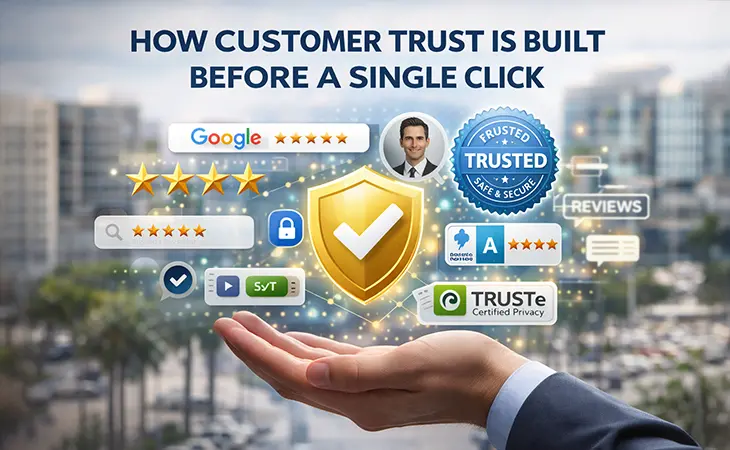

Google still matters in 2026, but not for the reasons most business owners think. It is no longer just about rankings, traffic, or being number one for a keyword. Google’s real role today is trust confirmation. It is where people go to decide whether you are real, current, and worth contacting.
Even when customers discover you somewhere else, TikTok, Instagram, referrals, newsletters, or AI tools, Google is often the final stop. They check your site, your reviews, your location, and your credibility before taking action. That makes Google less of a discovery engine and more of a decision engine.
If your business ignores that shift, you might still get attention, but you will struggle to convert it into confidence.
Google still matters in 2026, but not for the reasons most business owners think. It is no longer just about rankings, traffic, or being number one for a keyword. Google’s real role today is trust confirmation. It is where people go to decide whether you are real, current, and worth contacting.
Even when customers discover you somewhere else, TikTok, Instagram, referrals, newsletters, or AI tools, Google is often the final stop. They check your site, your reviews, your location, and your credibility before taking action. That makes Google less of a discovery engine and more of a decision engine.
If your business ignores that shift, you might still get attention, but you will struggle to convert it into confidence.
Google Traffic Is Not the Same as Google Influence
Many business owners still measure Google’s importance by traffic volume. That is outdated thinking. Influence matters more than raw clicks.
Someone who visits your site after searching your business name is far more valuable than someone who clicks a generic keyword. That branded search is a sign of intent. Google plays a huge role in shaping that moment.
Visibility without alignment creates noise. Google’s real value is in supporting the right demand, not just more demand.
Google Shapes Expectations Before the First Conversation
By the time someone contacts you, Google has already done part of the selling. Your site, services, language, and structure set expectations long before a human interaction happens.
If Google presents you as everything to everyone, you will attract mismatched leads. If it presents you clearly, you will attract buyers who understand what you do and how you work.
Local Businesses Still Live and Die by Google Signals
For local and service businesses, Google is still the backbone of visibility. Maps, reviews, proximity, and business information shape who gets contacted and who gets ignored.
Even when customers do not click through to your site, Google’s presentation influences their decision. Photos, service descriptions, and review quality matter more than ever.
In 2026, local visibility is not about gaming the system. It is about consistency, relevance, and trust signals that match what customers actually experience.
Google Works Best When It Is Not the Only Channel
The businesses performing best today do not depend solely on Google. They treat it as part of a broader ecosystem.
Social media creates awareness. Email builds relationships. Referrals create trust. Google validates everything. When those channels align, conversions feel easier.
When they do not align, Google becomes a bottleneck. The site does not match what people were promised elsewhere, and momentum stalls.
What Business Owners Should Focus on Instead of Rankings
Rankings still matter, but they are not the strategy. Business owners should focus on clarity, positioning, and expectation setting.
Google rewards sites that help users make decisions. That means clear offers, boundaries, and explanations, not keyword stuffing or generic pages.
If your website supports how you actually operate, Google becomes an amplifier instead of a gatekeeper.
Final Thoughts
Google’s importance in 2026 is not about chasing algorithms or obsessing over rankings. It is about understanding how modern buyers think and how they reduce risk before making a decision. Google has become the place where intent gets validated. People arrive there not just to find you, but to decide whether you are credible, current, and aligned with what they are looking for.
For experienced business owners, this means your website and Google presence are no longer marketing accessories. They are part of your operating system. They shape lead quality, sales conversations, pricing pressure, and even customer expectations before the first call or checkout. When those signals are unclear or outdated, growth feels harder than it should, even if traffic numbers look fine.
The businesses that win in 2026 are not the ones chasing visibility at all costs. They are the ones using Google intentionally, as a trust layer that supports every other channel. When your positioning, messaging, and delivery reality align, Google stops being something you worry about and starts becoming something that quietly works in your favor. That is where sustainable growth actually comes from.
Further Reading
To better understand how Google influences business decisions in 2026, these resources explore trust, search behavior, and visibility from different angles:
Google Search Central – How Google Evaluates Websites
Forbes – How Consumers Research Brands Online
Harvard Business Review – How Customers Decide What to Buy
Ready to Fix Your Website for Good?
Let's Grow Your Business Online
From websites to automation, we’ve helped 100+ business owners grow online