
I’ve lost count of how many times a business owner has told me,
“I built my site myself. It saved me money.”
Six months later, same person.
No calls. No leads. No growth.
That’s not bad luck. That’s the difference between a website that exists and a website that grows a business.
Let’s clear the air.
What DIY Website Builders Are Actually Good For
DIY builders like Wix, Squarespace, and others do one thing well:
They help you get something online fast.
That’s it.
They’re fine if:
You’re testing an idea
You need a temporary presence
Your business isn’t relying on the website for revenue yet
But growth? That’s where the wheels come off.
The Growth Ceiling Nobody Talks About
DIY builders all hit the same wall.
- Limited SEO control
- Weak page structure
- Bloated code you don’t control
- Cookie-cutter layouts that look like everyone else
You can tweak colors.
You can move blocks around.
But you cannot engineer performance.
And growth requires engineering.
Why Custom Websites Win Long-Term
A custom website is not about being fancy.
It’s about control.
Control over:
- How pages load
- How users move through the site
- How leads are captured and qualified
- How Google understands your business
That’s how real growth happens.
Not with drag-and-drop blocks.
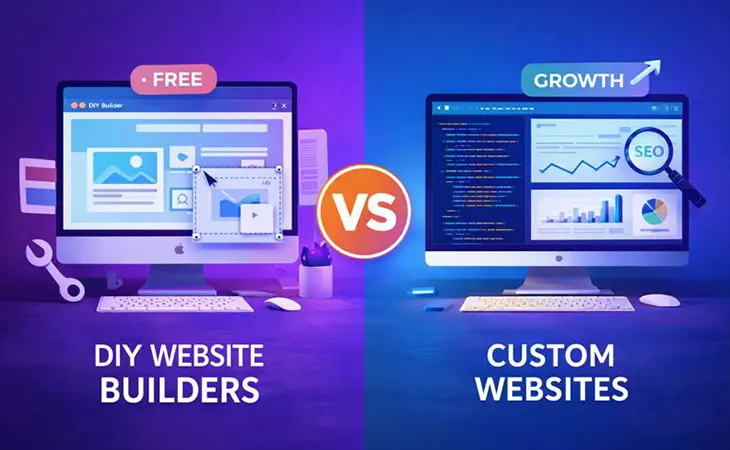
DIY Sites Are Built for Convenience
Custom Sites Are Built for Conversion
DIY builders are optimized for the person building the site.
Custom websites are optimized for:
- The customer
- The sales process
- The long game
Huge difference.
The SEO Reality Nobody Warns You About
Here’s the truth.
Most DIY websites:
- Rank for their business name
- Struggle for competitive keywords
- Plateau fast
Why?
Because SEO is not just content.
It’s structure, speed, internal linking, schema, and crawl logic.
DIY builders lock you out of half of that.
The “We’ll Upgrade Later” Trap
This is the most expensive mindset.
Business owners start DIY thinking:
“I’ll upgrade once I’m making more money.”
But the website is the thing that’s supposed to make the money.
So instead, you get:
- Lost leads
- Missed opportunities
- Months of wasted time
By the time they call us, they’re paying twice.
Custom Websites Are Not an Expense
They’re Infrastructure
No serious business says:
“I’ll worry about my building later.”
Your website is digital infrastructure.
If it’s weak:
- Marketing struggles
- Ads cost more
- SEO underperforms
- Sales conversations get harder
All downstream problems.
When DIY Makes Sense (Yes, Sometimes It Does)
I’ll be fair.
DIY builders make sense if:
- You’re pre-revenue
- You’re validating an idea
- You need speed over performance
But once your business depends on leads, calls, or online sales?
DIY becomes a liability.
The Honest Bottom Line
DIY websites help you exist.
Custom websites help you grow.
One is a shortcut.
The other is a system.
If your business matters, build it like it does.
Final Thoughts
I’ve seen this play out for over 20 years.
Business owners don’t regret switching to a custom website.
They regret waiting too long.
If growth is the goal, your website needs to be built for it from day one.
Further Reading
If you want outside confirmation from people who live and breathe this stuff, these articles line up exactly with what experienced agencies see in the real world.
- HubSpot – Why Redesign A Website?
- Smashing Magazine – Six Key Components Of UX Strategy
- Google Search Central – SEO Starter Guide: How Google Evaluates Websites
Ready to Fix Your Website for Good?
Let's Grow Your Business Online
From websites to automation, we’ve helped 100+ business owners grow online