



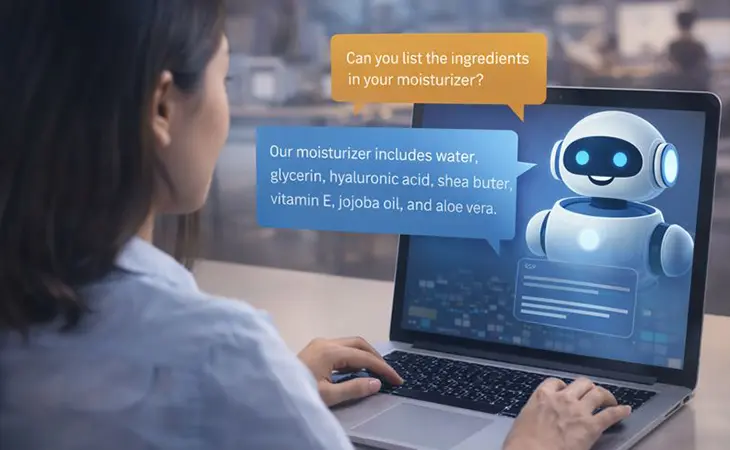
If you asked business owners five years ago what an AI chatbot was for, most would have said customer support or answering basic questions. In 2026, that definition is outdated. An AI chatbot for business is now part of how serious companies handle leads, qualify customers, protect staff time, and create better experiences without adding overhead.
The problem is not awareness. It is execution. Many businesses install chatbots and quietly remove them months later because they do not work the way they expected. The issue is rarely the technology itself. It is how the chatbot is trained, positioned, and integrated into the business.
This guide breaks down what an AI chatbot for business actually is in 2026, how it works behind the scenes, which industries benefit the most, and why proper training determines whether it becomes an asset or a liability.
What an AI Chatbot for Business Really Means in 2026
An AI chatbot for business is a conversational system designed to interact with customers using natural language while applying real business rules. It is not a script. It is not a decision tree pretending to be intelligent. When done correctly, it understands intent, context, and constraints.
Modern chatbots combine language models with structured logic. They know what your business does, who you serve, what you do not do, and when to escalate to a human. That distinction matters because customers are quick to spot vague or misleading answers.
In 2026, the expectation is clarity. Customers do not want clever replies. They want accurate information, clear next steps, and confidence that they are dealing with a real business that knows its own process.
How an AI Chatbot for Business Actually Works
Behind the interface, an AI chatbot for business operates in layers. The first layer interprets what the customer is trying to accomplish. The second layer applies business-specific rules such as service areas, pricing thresholds, availability, or product limitations. The final layer determines action.
That action could be answering a question, asking a follow-up, booking a call, creating a ticket, or handing the conversation to a team member. The key is that the chatbot does not guess. It follows defined logic informed by training.
When businesses skip this structure and rely on generic responses, the chatbot becomes unpredictable. When they define boundaries and intent clearly, the chatbot becomes consistent and dependable.
Why Businesses Are Adopting AI Chatbots at Scale
Customer behavior has shifted. People expect immediate responses, even for complex questions. They also expect those responses outside traditional business hours. An AI chatbot for business fills that gap without requiring a larger staff.
Another driver is lead quality. Businesses are tired of spending time on inquiries that are not a fit. Chatbots can ask qualifying questions upfront and route only serious prospects forward.
Finally, there is operational strain. As businesses grow, communication volume increases faster than team capacity. Chatbots absorb routine interactions so teams can focus on work that requires judgment.
AI Chatbots for Ecommerce Businesses
Ecommerce businesses use AI chatbots to guide buying decisions, reduce abandonment, and handle post-purchase support. In 2026, this goes far beyond order tracking.
A properly trained chatbot understands product differences, use cases, and common objections. It can help customers choose the right item instead of forcing them to search endlessly or abandon the site.
During high-volume periods, chatbots prevent support bottlenecks. They maintain response quality while reducing pressure on customer service teams.
AI Chatbots for Service-Based Businesses
Service businesses benefit from AI chatbots by filtering and qualifying leads before human interaction. This protects time and improves the quality of booked conversations.
A trained chatbot can explain services, outline pricing ranges, and set expectations. That transparency filters out mismatched prospects early and builds trust with the right ones.
In 2026, service businesses that skip this step often feel overwhelmed despite steady lead flow. The chatbot becomes the gatekeeper that restores balance.
AI Chatbots for Home Service Companies
Home service companies rely heavily on speed and clarity. An AI chatbot for business allows customers to check service areas, describe issues, and book appointments quickly.
Chatbots can triage urgency, capture details, and reduce missed opportunities outside business hours. They also educate customers on preparation, pricing structure, and next steps.
For home services, this is not about replacing dispatch. It is about capturing intent the moment it appears.
AI Chatbots for Professional Services
Professional services such as legal, financial, consulting, and agencies use AI chatbots to manage intake and expectations. Trust is critical in these industries, which means tone and boundaries matter.
A trained chatbot explains process, next steps, and limitations without giving advice it should not. It prepares both the client and the team for productive conversations.
When done right, the chatbot improves efficiency without undermining professionalism.
Common Mistakes Businesses Make With AI Chatbots
The most common mistake is deploying an untrained chatbot and expecting results. Generic bots give generic answers, which damages credibility.
Another mistake is treating the chatbot as a replacement for people. Customers still want human judgment at key moments. A good chatbot knows when to step aside.
Finally, many businesses fail to update their chatbot as offerings change. An AI chatbot for business must evolve alongside the business to remain useful.
Training an AI Chatbot for Your Business
Training an AI chatbot for business means teaching it how your company actually works. This includes services, products, tone, decision rules, escalation paths, and limitations.
It also means defining what the chatbot should not do. Clear boundaries prevent misinformation and frustration.
Businesses that approach training strategically see better outcomes. Those that treat it as a quick install usually remove the chatbot within months.
How We Help Businesses Implement AI Chatbots Correctly
We help businesses design and train AI chatbots that align with real operations. That means no generic scripts and no vague answers.
We train the chatbot on your processes, language, and rules so it behaves like an extension of your team. The goal is better lead quality, faster response times, and reduced operational strain.
An AI chatbot for business should support growth, not create confusion. That only happens when it is built intentionally.
Final Thoughts
An AI chatbot for business in 2026 is not about automation for its own sake. It is about leverage, clarity, and consistency.
Businesses that invest in properly trained AI chatbots gain an advantage that compounds over time. They serve customers better, protect their teams, and move faster without sacrificing trust. When AI reflects how a business actually operates, it becomes part of the foundation rather than a temporary experiment.
Further Reading
For deeper insight into how an ai chatbot for business is being used to improve customer experience, streamline operations, and support growth in 2026, explore these trusted industry perspectives.
Forbes – How AI Chatbots Are Transforming Customer Experience
https://www.forbes.com/sites/forbestechcouncil/2023/11/07/how-ai-chatbots-are-transforming-customer-experience/
Entrepreneur – How AI Chatbots Are Helping Businesses Scale
https://www.entrepreneur.com/business-news/how-ai-chatbots-are-helping-businesses-scale/463366
HubSpot – Chatbot Examples and Use Cases for Business
https://blog.hubspot.com/service/chatbot-examples
Ready to Fix Your Website for Good?
Let’s Grow Your Business Online
From websites to automation, we’ve helped 100+ business owners grow online
Book Your Free Strategy Call